
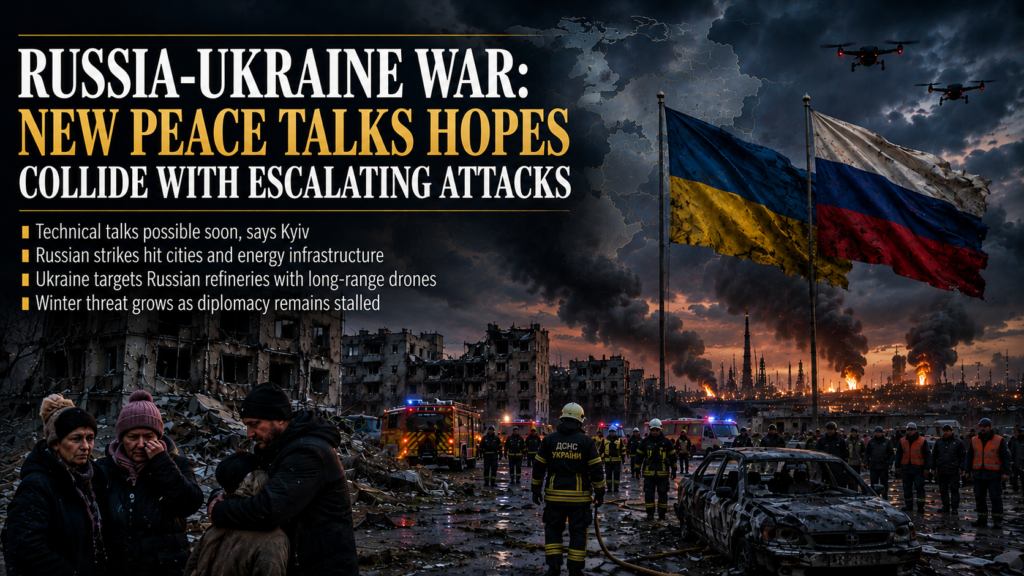
The Russia-Ukraine war is entering another critical phase as Kyiv and Moscow show little sign of accepting each other’s core demands, even as new contacts between Washington and Moscow revive questions about diplomacy. Ukraine says technical talks could take place soon, while Russia continues attacks on Ukrainian cities, logistics and energy infrastructure. For Pakistan, the conflict matters because it continues to influence food, energy, security and global geopolitics.
What Is the Latest Development in the Russia-Ukraine War?
Ukraine’s top presidential adviser, Kyrylo Budanov, said on August 28 that “technical talks” on the war could take place soon. He cautioned against expecting an immediate breakthrough and said the conflict was unlikely to end before winter.
The comments came as diplomatic efforts remain stalled. The last trilateral negotiations involving Russia, Ukraine and the United States were held in February, but did not produce a lasting ceasefire or settlement.
Territory remains a central obstacle. Russia has demanded that Ukraine withdraw from parts of the eastern Donbas region, while Kyiv has rejected giving up territory it still controls.
Washington has nevertheless kept communication channels open with Moscow. CIA Director John Ratcliffe recently visited Moscow and held a working-level meeting with Russia’s foreign intelligence chief, Sergei Naryshkin. The Kremlin confirmed the meeting, while President Donald Trump described the visit as semi-routine. Details have not been publicly disclosed.
The development shows that diplomatic and intelligence contacts remain possible even while fighting continues.
Russia Intensifies Attacks on Ukraine
The diplomatic contacts have coincided with another wave of Russian attacks.
Reuters reported that Russia launched a major nighttime air assault on August 27, striking ports, energy facilities, industrial sites and retail distribution centres in several Ukrainian cities. Ukrainian forces said they intercepted seven ballistic missiles, with U.S.-supplied Patriot systems involved in the defence.
A further wave of Russian drone attacks hit the Kyiv region on August 28, damaging apartment buildings, warehouses, vehicles and critical infrastructure. AP reported one death and at least two injuries.
Ukraine says the attacks are increasingly aimed at infrastructure needed to keep cities functioning. Reuters reported that Ukrainian officials said about 90% of retail food logistics networks had been destroyed by recent attacks. Officials stressed that this did not mean a total food shortage, although Kyiv has periodically experienced shortages of fresh produce, milk and sugar.
The escalation comes ahead of winter, when damage to electricity, heating and transport infrastructure could have a larger humanitarian impact.
Ukraine Strikes Back Inside Russia
Ukraine has also intensified long-range drone attacks against targets inside Russia, with energy infrastructure a major focus.
Reuters reported that Russian gasoline production had fallen to roughly 70% of domestic demand by late August after drone attacks forced shutdowns at refineries in Perm, Nizhny Novgorod and Yaroslavl.
Daily gasoline production fell to around 80,000 tonnes against summer demand of roughly 115,000 tonnes, creating a shortfall of about 35,000 tonnes a day. Russia has responded by increasing imports and maintaining an export ban designed to protect domestic supplies.
The expanding use of drones is also changing the battlefield. Long-range unmanned systems allow both countries to strike targets far behind the front lines without committing large numbers of troops.
The energy campaign also demonstrates how the war has become increasingly connected to economic resilience. Ukraine wants to reduce Russia’s ability to finance and supply its military, while Moscow continues to target Ukrainian infrastructure and logistics.
The NATO Question and Wider Security Risks
Another concern is the possibility of the conflict creating a direct confrontation between Russia and NATO.
Russia has warned Britain over Ukraine’s use of Western-supplied weapons against Russian territory and said it could target British military installations if such weapons were used in attacks on Russia.
The warnings have increased concern among European governments, although Trump said he was not worried that Putin would attack NATO territory.
Sweden has also announced that it will deploy Gripen fighter jets and a corvette warship to help monitor and protect Finland’s territory through the end of 2026. The move reflects broader European efforts to strengthen defence capabilities as the war continues.
What Happens Next?
The immediate test will be whether proposed technical talks develop into substantive negotiations. Ukraine says meaningful progress requires Russia to move toward compromise, while Moscow continues to press territorial demands.
The approaching winter is another critical factor. Russia is expected to continue targeting Ukraine’s energy and logistics systems, while Ukraine is likely to maintain pressure on Russian oil infrastructure and other strategic targets.
For now, the latest development is a mixture of diplomacy and escalation: communication channels remain open, but the battlefield is still active.
The Russia-Ukraine war has entered a phase in which diplomacy and military pressure are moving side by side. New US-Russia contacts and the prospect of technical talks offer a possible route back to negotiations, but continued attacks and unresolved territorial demands show how difficult a settlement remains.
The conflict’s wider effects will continue through energy markets, food security, inflation and changing international alliances. The next few months, particularly the approach of winter, could determine whether the latest diplomatic contacts become the beginning of a serious peace process or another pause before renewed escalation.