
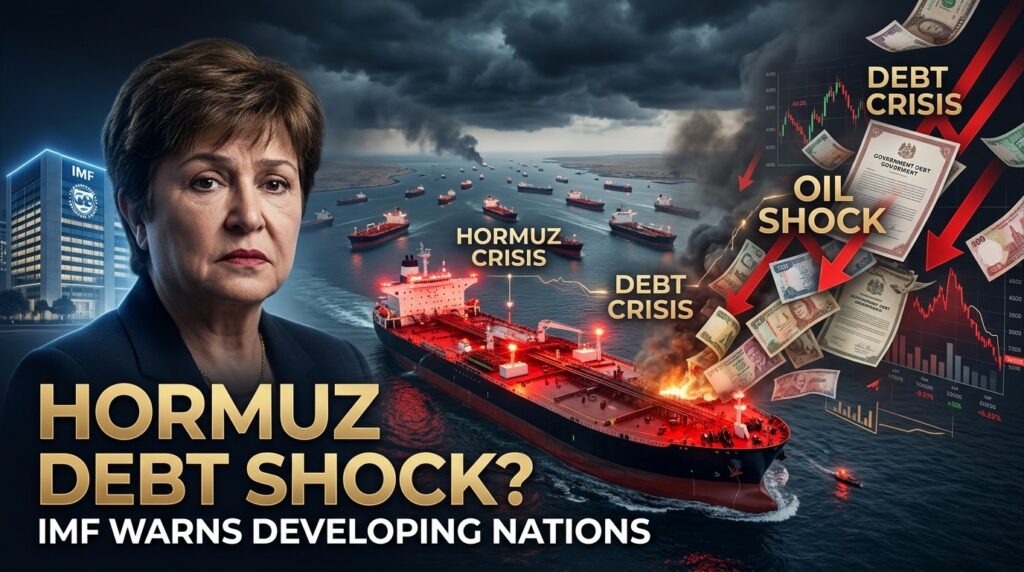
The International Monetary Fund (IMF) has issued a stern warning that the ongoing blockade of the Strait of Hormuz is driving up global borrowing costs and pushing developing nations toward a new debt shock. Speaking on the sidelines of the G20 finance ministers meeting in Asheville, North Carolina, IMF Managing Director Kristalina Georgieva warned that stubborn inflation stemming from the vital shipping lane’s shutdown threatens to erase recent fiscal progress in emerging markets. For debt-laden developing economies, including Pakistan, rising global bond yields could severely compound refinancing pressures and elevate debt service obligations.
Escalating Energy Costs and Global Inflation
The fundamental catalyst behind the IMF’s latest economic alert is the continued disruption along the Strait of Hormuz, a maritime chokepoint through which approximately one-fifth of the world’s petroleum passes. Although the global economy absorbed the initial energy shock better than anticipated using strategic oil reserves, the prolonged closure has begun stalling the disinflation process worldwide.
- Stalled Disinflation: Persistent energy price spikes are forcing central banks in advanced economies to maintain elevated policy interest rates for longer periods.
- Rising Bond Yields: Selling pressure in US Treasury markets has driven long-term bond yields upward, pulling global capital toward safe-haven assets and away from emerging markets.
- Spillover Effect: Elevated yields in advanced economies automatically raise risk premiums and sovereign borrowing costs for developing nations seeking external capital.
The Staircase Effect: Global Debt Reaches Historical Highs
The IMF chief highlighted that global public debt has risen to nearly 100% of global GDP, a historical high reminiscent of post-World War II levels. Georgieva noted that sovereign debt behaves like a “staircase”—it surges dramatically during geopolitical or economic shocks but rarely returns to pre-crisis levels during recovery phases.
For developing nations, high refinancing requirements mean that incoming credit is consumed by servicing existing obligations rather than funding domestic health, education, or infrastructure projects. Furthermore, a sharp drop in net external financing—including cuts to official development assistance—has left low-income countries with shrinking financial cushions.
Direct Impact on Pakistan’s Economy
The IMF’s warning holds urgent implications for Pakistan, which remains under an active IMF extended fund facility and relies heavily on external debt rollovers and international energy shipments.
- Import Bill Pressure: Elevated crude oil prices directly expand Pakistan’s current account deficit and place immediate downward pressure on the Pakistani Rupee.
- Elevated Domestic Borrowing Costs: Higher global rates limit Islamabad’s ability to issue Eurobonds or Sukuk in international markets at affordable rates, forcing reliance on expensive domestic short-term debt.
- Fiscal Tightening: As debt-servicing costs absorb a significant share of federal revenue, domestic fiscal space for development spending narrows significantly.
Strategic Policy Recommendations by the IMF
To prevent the Hormuz energy bottleneck from evolving into a sovereign debt crisis across emerging markets, the IMF outlined key priorities for global policymakers.
The Fund emphasized that central banks must strictly maintain price stability mandates while governments implement credible medium-term consolidation plans. Additionally, for countries where debt has reached unsustainable levels, the IMF called for accelerated debt restructuring under mechanisms such as the G20 Common Framework.
The convergence of the Strait of Hormuz blockade and historically elevated global debt levels has placed developing nations in a precarious position. As global borrowing costs climb, vulnerability increases across emerging markets. For nations like Pakistan, navigating this new debt shock will require strict fiscal discipline, structural economic reforms, and proactive engagement with international financial institutions.