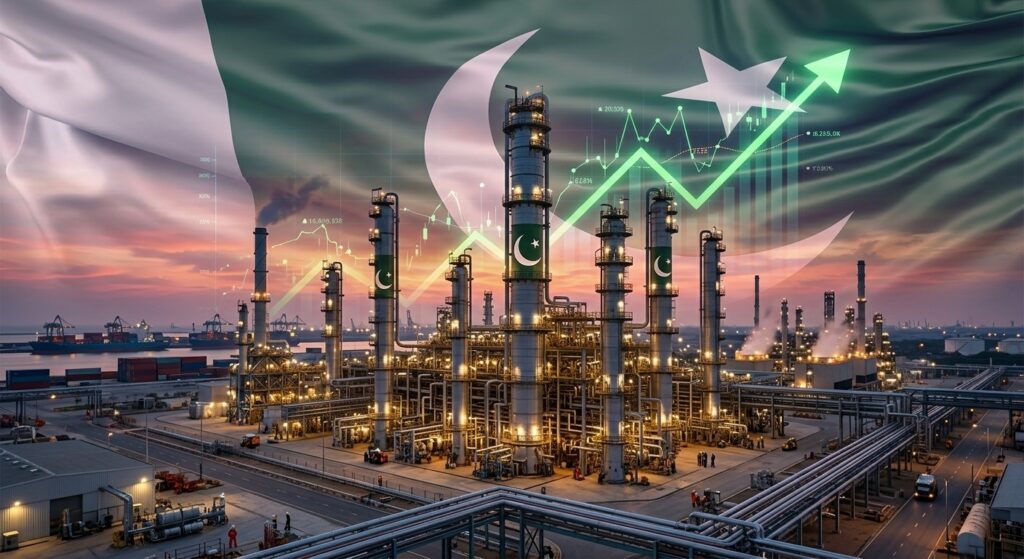
Pakistan’s major oil refineries, including ARL, Cnergyico, NRL, and PRL, have officially signed Upgrade Agreements with Inter State Gas Systems (ISGS) under the Pakistan Brownfield Refinery Policy. Approved by the Economic Coordination Committee (ECC), these agreements aim to modernize refinery infrastructure and advance fuel quality to Euro-V standards.
In a major development for Pakistan’s energy sector, leading domestic oil refineries have formally executed Upgrade Agreements with the Government of Pakistan under the amended Brownfield Refinery Policy 2023. The official signing ceremony, held in Islamabad on September 24, 2026, involved Inter State Gas Systems (Private) Limited (ISGS) as the government’s nominated implementation entity. Material disclosures submitted to the Pakistan Stock Exchange (PSX) confirm that the agreements will drive extensive modernization across the country’s refining infrastructure.
Refineries Formally Sign Upgrade Agreements with ISGS
On September 24, 2026, representatives from Pakistan’s refining sector and government officials gathered in Islamabad to sign the landmark Upgrade Agreements. The execution follows the formal approval granted by the Cabinet’s Economic Coordination Committee (ECC) under the “Pakistan Oil Refining Policy for Upgradation of Existing/Brownfield Refineries, 2023” (as amended in February 2024 and August 2026).
Under the framework, Inter State Gas Systems (Private) Limited (ISGS)—a state-owned enterprise—was designated by the Ministry of Energy (Petroleum Division) as the implementation entity to execute these contracts on behalf of the federal government.
Which Refineries Signed Under the Pakistan Brownfield Refinery Policy?
Four major oil refining companies issued material information disclosures to the Pakistan Stock Exchange (PSX), confirming their participation and execution of the agreement:
- Attock Refinery Limited (ARL): Confirmed agreement execution to modernize its refining infrastructure, enhance operational efficiency, and transition production toward Euro-V standard fuels.
- Cnergyico Pk Limited: Signed the agreement via ISGS following ECC approval to implement its approved refinery upgradation project in compliance with policy guidelines.
- National Refinery Limited (NRL): Announced the agreement as a major step toward modernizing existing infrastructure, improving energy security, and strengthening national supply-chain resilience.
- Pakistan Refinery Limited (PRL): Disclosed the execution of the Upgrade Agreement on September 24, 2026, reaffirming its commitment to upgrading and modernizing its refining plant.
Key Details and Policy Framework Breakdown
The signing of these agreements establishes a formal framework between domestic refineries and the Ministry of Energy. The core details from the regulatory notifications include:
- Policy Name: Pakistan Oil Refining Policy for Upgradation of Existing/Brownfield Refineries, 2023 (Amended August 2026).
- Approving Body: Economic Coordination Committee (ECC) of the Cabinet.
- Implementation Entity: Inter State Gas Systems (Private) Limited (ISGS).
- Agreement Signing Date: September 24, 2026.
- Event Location: Islamabad, Pakistan.
- Regulatory Filings: Submitted under Sections 96 and 131 of the Securities Act, 2015, and PSX Listing Regulations.
- Primary Objectives: Plant modernization, operational efficiency improvement, and conversion to Euro-V fuel standards.
By entering into these Upgrade Agreements, Pakistan’s refining sector moves toward long-term operational modernization and environmental sustainability. The implementation of these upgradation projects is expected to enhance local fuel quality, strengthen supply chain resilience, and reduce national reliance on imported refined petroleum products.