
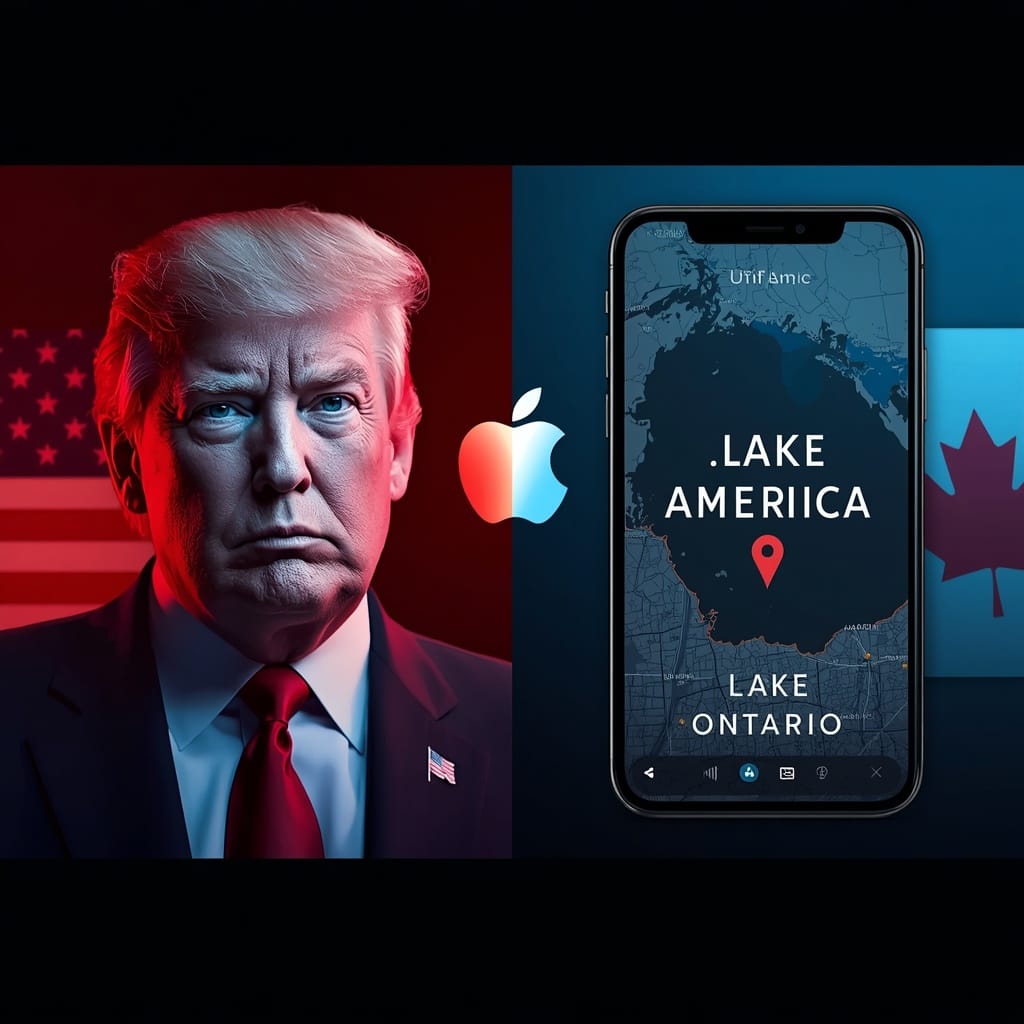
U.S. President Donald Trump has directly lobbied Apple to update its mapping software and rename Lake Ontario to “Lake America,” escalating a high-stakes geopolitical trade conflict through digital cartography. The direct outreach follows an executive order directing federal databases to officially recognize the strategic Great Lake under its new American title. The move has created a sharp divide among Silicon Valley tech giants, with Google updating its maps for U.S. users while Apple Maps holds out against the administrative pressure.
- Executive Order Issued: President Donald Trump signed an executive order mandating that U.S. federal databases change “Lake Ontario” to “Lake America”.
- Direct Tech Outreach: U.S. Interior Secretary Doug Burgum confirmed Trump personally contacted Apple executives to push for the name change on Apple Maps.
- Silicon Valley Division: Google Maps adopted “Lake America” for U.S.-based IP addresses, whereas Apple Maps and MapQuest have maintained the traditional name.
- Economic Trade War: The cartographic dispute coincides with 50% tariffs imposed by Washington on $20 billion worth of Canadian imports, triggering dollar-for-dollar retaliation from Ottawa.
- Firm Canadian Rejection: Canadian Prime Minister Mark Carney and Ontario Premier Doug Ford rejected the name change, reaffirming the lake’s Indigenous roots and Canadian heritage.
Trump Leverages Digital Cartography in Escalating Trade War
The diplomatic rift between the United States and Canada has moved beyond economic tariffs directly into the digital realm. Following the breakdown of bilateral trade negotiations, the White House imposed 50% tariffs on approximately $20 billion of Canadian exports, targeting sectors ranging from dairy and agriculture to manufacturing.
In response to Canada’s matching dollar-for-dollar retaliatory tariffs, President Donald Trump signed an executive order targeting the border geography shared by the two nations. Citing frustrations over trade imbalances, Trump ordered the U.S. Geographic Names Information System (GNIS) to update all federal records, replacing the historic hydronym Lake Ontario with “Lake America”.
The cartographic maneuver mirrors executive steps taken in early 2025, when the administration designated the Gulf of Mexico as the “Gulf of America” for official federal use.
Tech Industry Split: Google Maps Caves While Apple Maps Holds Out
The executive directive has placed global technology corporations in a complex position, forcing them to navigate conflicting international jurisdictions and government data feeds.
Google updated its mapping platform in late August to align with GNIS updates. Under Google’s localized viewing protocol:
- U.S. Users: Display the body of water as “Lake America”.
- Canadian Users: Continue to see the historical title “Lake Ontario”.
- Global Users: See a dual label formatted as “Lake Ontario (Lake America)”.
In contrast, Apple Maps has resisted immediate administrative pressure. Speaking on Fox Business, U.S. Interior Secretary Doug Burgum revealed that President Trump personally contacted Apple leadership to request that Apple Maps reflect the “Lake America” designation. Despite the high-level request, Apple Maps continues to show “Lake Ontario” globally. MapQuest similarly confirmed on social media that it will not modify the established geographic name.
Canadian Leadership and State Officials Reject the Renaming
The unilateral renaming has drawn swift pushback from Canadian leaders, Indigenous representatives, and state officials within the United States.
Canadian Prime Minister Mark Carney emphasized that the name “Ontario” originates from the Indigenous Iroquoian word Ontari’io, meaning “great lake” or “beautiful water,” predating both the U.S. Declaration of Independence and Canadian Confederation. Carney publicly asserted that despite changes in U.S. foreign policy or hydronyms, “naming reality means calling it Lake Ontario — then, now and always”.
Ontario Premier Doug Ford unveiled a billboard-sized sign along the Canadian coastline stating “Lake Ontario. Now and Forever”. Premier Ford noted that while President Trump holds authority over U.S. federal naming registries, the global community will retain the established name.
Domestically, New York Governor Kathy Hochul confirmed that New York State agencies will not adopt the “Lake America” label, characterizing the cartographic dispute as an unneeded distraction from pressing agricultural export challenges facing local farmers.
The ongoing pressure on Apple Maps highlights a growing nexus between trade policy, executive power, and digital infrastructure. As U.S. federal agencies enforce the “Lake America” label within domestic boundaries, private technology platforms remain caught between presidential demands and international consensus. Whether Apple coves to administration pressure or maintains its existing geographical data, the feud underscores how cartography has become a modern tool of economic leverage.