
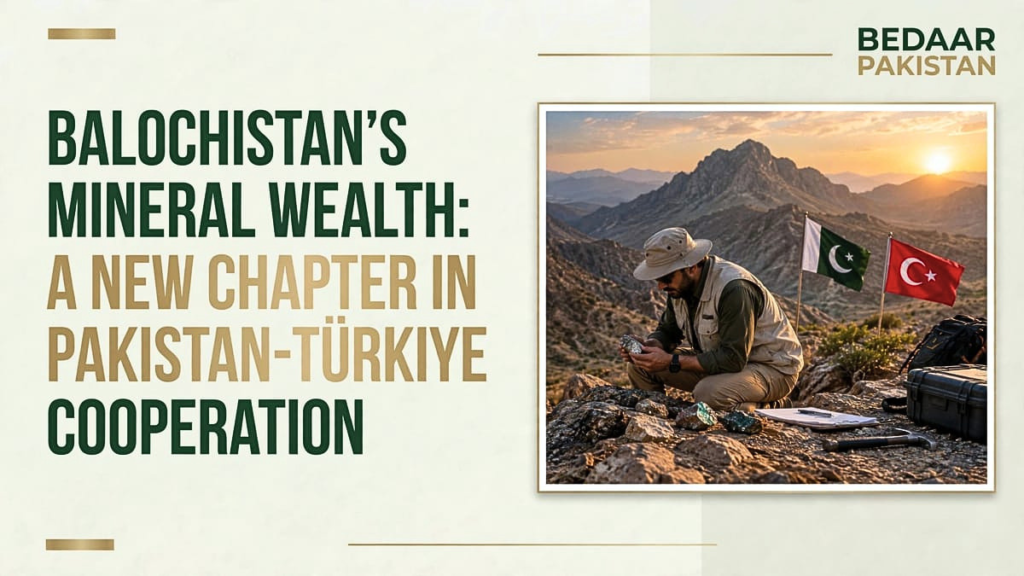
A mineral deposit hidden beneath the ground may look like an ordinary stretch of land from above, but discovering what lies beneath it can open the door to new industries and economic opportunities. In Balochistan, where mineral exploration holds considerable promise, a new partnership between Pakistan and Türkiye is bringing this possibility into focus. Their proposed project in Pishin marks the beginning of a process that could reveal valuable resources and create opportunities for future development. For now, the focus is on exploration—finding out what the land holds before determining what can be developed from it.
What the Pakistan–Türkiye Agreement Covers
Every mineral exploration project begins with a specific piece of land, and for this partnership, that starting point is Pishin district in Balochistan. An area covering 498.82 square kilometres has been identified for exploration under a proposed agreement between Pakistan Mineral Development Corporation (PMDC) and Türkiye’s MTA International Company (MTAIC), alongside an entity to be designated by the Balochistan government.
MTAIC is expected to lead operations, bringing technical expertise to the project. The preliminary term sheet, signed on October 16, 2026, sets the partnership in motion, with final agreements targeted by December 31. The real significance will emerge as exploration reveals what the area contains and whether those resources can be developed commercially.
Which Minerals Are Being Explored?
From electrical wiring to modern electronics, minerals play a part in many products people use every day. The proposed exploration project in Pishin will focus on antimony, copper, gold, silver and molybdenum—minerals with different uses across modern industries.
Antimony is used in flame-retardant materials, batteries and electronics. Copper helps carry electricity through power systems and wiring, while gold and silver are valued for jewellery and their use in electronic components. Molybdenum, meanwhile, strengthens steel and other alloys used in industrial equipment.
Each mineral offers different possibilities, but their presence alone does not guarantee economic value. Exploration must establish how much is available, whether it can be extracted commercially and what responsible development could look like. The findings will help determine the project’s future potential.
Why This Partnership Matters
Finding minerals in the ground is only the first step. The real value comes when these minerals are used to make products, support industries and create business opportunities.
The partnership between Pakistan and Türkiye could help make this possible by bringing together local resources and technical knowledge. If exploration finds minerals in useful and commercially valuable quantities, the project could create opportunities for investment, mining and mineral processing. Local businesses may also benefit through transport, engineering and other services.
There is also an opportunity to process minerals within Pakistan instead of selling them only in their raw form. This could help create more jobs and increase the value gained from these resources. However, these benefits will depend on the exploration results and whether the project can be developed successfully.
What Could It Mean for Local Communities?
When a new project enters an area, its impact can reach beyond the project site. If the mineral project in Pishin moves towards development, local people could find opportunities in transport, equipment supply, construction and other support services. Shops and small businesses may also benefit as demand for these services grows.
The project could also create a need for workers with technical skills, making training and learning new skills important for local employment. However, these opportunities will depend on the project’s progress and the number of jobs it eventually requires.
Alongside economic benefits, protecting the environment and respecting the needs of nearby communities will be essential. Careful planning can help ensure that future development considers both the region’s natural resources and the people who live there.
What Happens Next?
The agreement is only the beginning. Before the project can move towards mining, the partners must complete their final agreements and begin the next stages of exploration. They aim to finalise these agreements by December 31, 2026.
After that, the focus will be on what experts find beneath Pishin’s land. Their findings will help determine which minerals are present, how much may be available and whether extracting them would be commercially worthwhile. The project will also need careful planning to address environmental and technical requirements.
Each stage will bring the partners closer to understanding the area’s true potential. Whether that potential becomes a source of jobs, investment and industrial growth will depend on what exploration reveals and how the project develops.
Balochistan’s land may hold resources that can bring new opportunities in the future. The partnership between Pakistan and Türkiye is a step towards finding out what these resources can offer. The journey is still at an early stage, and much will depend on what exploration reveals. If valuable minerals are found and the project moves forward, they could support new businesses, create jobs and help local industries grow. What begins with exploring the land could, over time, become an opportunity for a better economic future.