
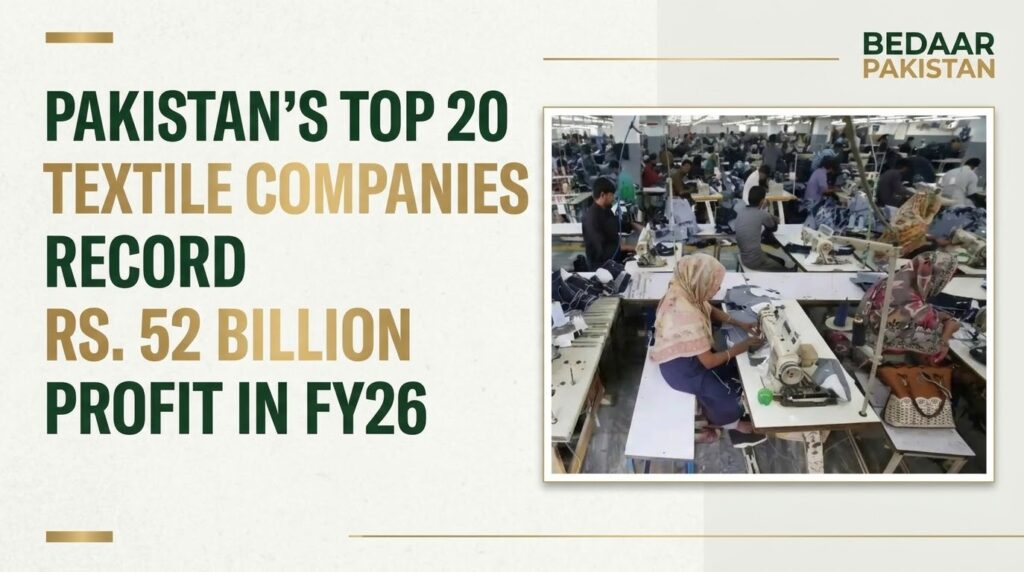
Pakistan’s top 20 listed textile companies recorded a combined after-tax profit of Rs. 51.9 billion in fiscal year 2026, marking an 11% year-on-year increase. According to a Topline Securities report, this growth was primarily driven by lower finance costs.
Pakistan’s leading listed textile companies have demonstrated resilience despite a challenging macroeconomic environment. A recent financial report shows that cumulative profits climbed to Rs. 51.9 billion during the 2026 fiscal year. Analysts attribute this positive momentum to financial restructuring and lower borrowing expenses across the sector.
What drove the profitability growth in FY26?
According to data compiled by Topline Securities, the 20 analyzed firms improved their collective bottom line to Rs. 51.9 billion (approximately $185 million), up from Rs. 46.7 billion in the previous fiscal year. This translates to an 11% year-on-year growth rate.
The primary catalyst behind this profitability expansion was a notable reduction in finance costs. As monetary easing took effect and interest rates moderated compared to previous peak levels, corporate debt servicing burdens eased, allowing manufacturers to retain healthier margins despite relatively stagnant topline sales.
Key Financial Highlights and Performance Breakdown
While overall earnings increased, individual corporate performances varied across the industry due to changing gross margins and fluctuating demand.
- Combined Sector Earnings: Reached Rs. 51.9 billion in FY26, compared to Rs. 46.7 billion previously.
- Percentage Growth: Up by 11% year-on-year.
- Individual Variations: Major entities like Nishat Mills experienced contrasting pressures; for instance, its unconsolidated profit dropped 9% to Rs. 5.5 billion due to a contraction in gross margins and lower dividend income, even as its sales grew by 2% to reach Rs. 181.6 billion.
What challenges continue to face Pakistan’s textile sector?
Despite the positive earnings report, sector experts warn that structural headwinds persist. Pakistan’s export-oriented manufacturing base continues to navigate severe hurdles that could impact future quarters.
Key challenges highlighted by market analysts include:
- High Energy Costs: Steep electricity and gas tariffs relative to regional competitors continue to squeezeindustrial competitiveness.
- GSP+ Status Uncertainty: Ongoing reviews and compliance requirements regarding Pakistan’s preferential trade status with the European Union pose strategic risks.
- Global Demand Slowdown: Sluggish economic conditions and softened consumer spending in major export destinations like the United States and Europe threaten export volumes.
The textile sector remains a vital backbone of Pakistan’s foreign exchange earnings, and industry stakeholders are closely monitoring upcoming monetary policies and energy reforms to sustain profitability.