
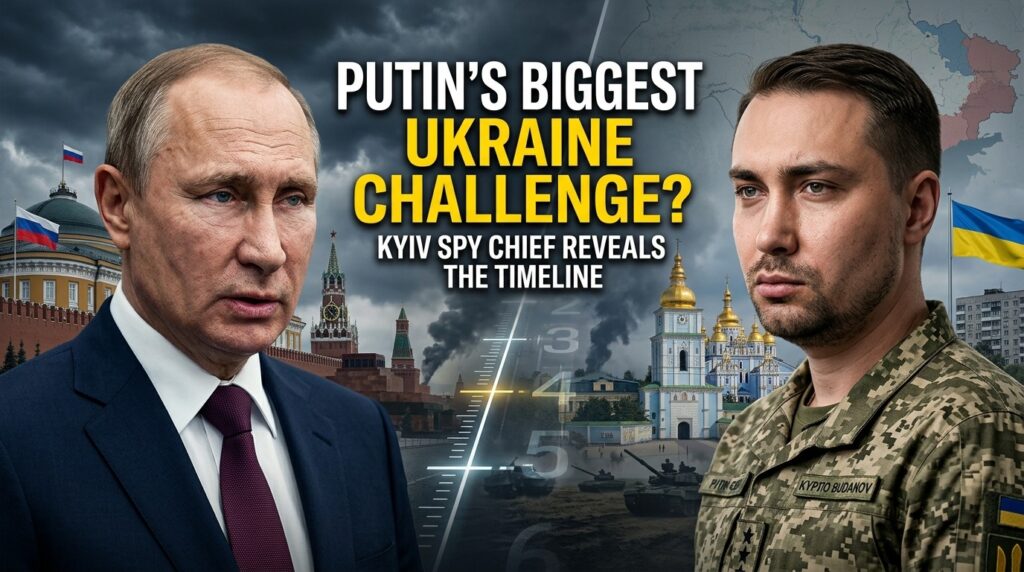
Ukrainian military intelligence estimates that Russia’s military machine and financial backing will be critically depleted by 2028. Lieutenant General Oleh Ivashchenko, head of Ukraine’s Defence Intelligence, signalled that despite recruitment efforts, mounting casualties are straining Moscow’s frontline operations. The projected resource wall comes as international envoys try to broker peace talks between Moscow and Kyiv amid ongoing strikes
- Resource Expiration: Ukrainian intelligence forecasts Russian military and economic resources will face severe exhaustion by 2028.
- High Casualty Gap: Russia recruits approximately 1,000 to 1,200 personnel daily while losing up to 1,500 troops per day in combat operations.
- Diplomatic Efforts: U.S. envoys recently held separate discussions in Kyiv and Moscow to explore preliminary peace terms.
Moscow’s Resource Clock Moves Toward 2028
The Kremlin faces a widening gap between its tactical ambitions and long-term capability. Military intelligence estimates indicate that Russia holds sufficient equipment and funds for immediate combat operations over the next 16 months, but faces a sharp cliff beyond that.
Can Vladimir Putin sustain a long attrition campaign without breaking domestic reserves?
Ukrainian intelligence analysis reveals that recruitment efforts are no longer keeping pace with battlefield attrition. Daily casualties consistently exceed daily mobilization drives. This dynamic is rapidly chewing through manpower reserves that Moscow relied on to maintain steady pressure along the front line.
Attrition Rates Overwhelm Kremlin Recruitment Efforts
Recruitment centers in Russia bring in roughly 1,000 to 1,200 enlistments each day. Yet daily casualty counts regularly cross 1,400 to 1,500 personnel, with an estimated 60 percent killed in action.
This math presents a direct tactical problem for Russian commanders. Units deployed in high-intensity assault zones suffer continuous manpower deficits.
Intelligence reports highlight declining morale among frontline Russian personnel as rotations grow infrequent and loss rates remain elevated. High financial bonuses offered to new recruits have kept the pipeline open, but the net loss of troops threatens unit cohesion over time.
Diplomatic Moves Amid Escalating Strikes
While frontline fighting continues, diplomatic back-channels remain active. U.S. envoys Jared Kushner and Steve Witkoff recently conducted quiet visits to both Moscow and Kyiv to gauge interest in structured negotiations.
Neither side reached a formal breakthrough during these initial exchanges. However, diplomatic envoys noted that both capitals kept the door open for follow-up discussions.
Even as representatives discussed options in political centers, long-range strikes continued targeting military and energy infrastructure across both territories.
| Indicator | Russian Operational Status | Ukrainian Defense Assessment |
| Recruitment vs Losses | Deficit of 300+ personnel daily | Unsustainable long-term manpower drain |
| Resource Horizon | Sufficient for near-term operations | Critical exhaustion targeted by 2028 |
| Negotiation Stance | Open to talks while maintaining strikes | Insisting on security guarantees |
Economic Strains and Strategic Shifts in South Asia
The conflict’s ripple effects reach far beyond Eastern Europe, directly affecting Asian markets and diplomatic priorities. Shifts in global energy prices and grain supply chains keep policymakers in South Asia focused on the war’s duration.
For Pakistan, the war’s timeline carries significant economic implications. Prolonged instability in Eastern Europe keeps global LNG prices volatile and complicates commodity import strategies for developing nations. A prolonged conflict also redirects global diplomatic focus toward Europe. That shift leaves regional security and economic partnerships across South Asia navigating a changing international landscape
The timeline provided by Kyiv’s intelligence chief underscores a growing problem for the Kremlin. While Moscow retains the resources to push forward in the short term, casualty deficits and economic strain threaten its long-term campaign. As diplomatic envoys search for a path to negotiations, the arithmetic of war continues to press against both nations.