
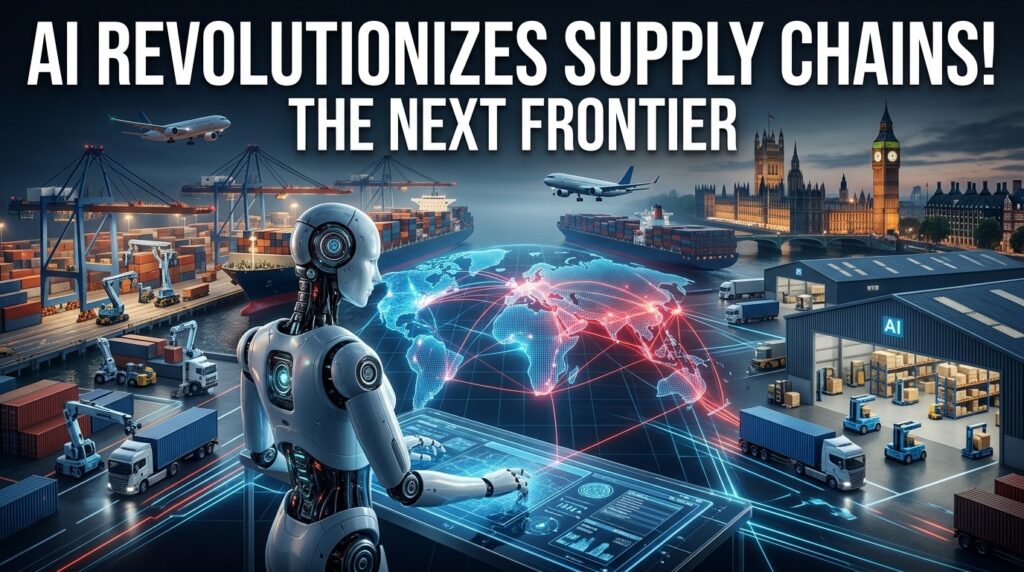
Artificial Intelligence (AI) has established itself as the next defining frontier for the global supply chain, shifting from theoretical application to mission-critical operational integration. This central theme dominated discussions at the recent Supply Chain LIVE event, where industry chieftains from diverse sectors—including pharmaceuticals, retail, and manufacturing—convened to examine the technologies reshaping global commerce. For Pakistani industries, particularly the textile and export-oriented sectors, understanding and adopting these advanced AI technologies is no longer optional but essential for maintaining international competitiveness and overcoming systemic logistical bottlenecks.
- Primary Driver: Predictive AI and machine learning are revolutionizing demand forecasting and risk mitigation.
- Economic Impact: Research from McKinsey & Company indicates AI-powered supply chain management can reduce logistics costs by 15% and improve inventory levels by 35%.
- Sector Applications: Real-world examples show companies like Merck and Ocado Group using AI to build predictive models for manufacturing and inventory optimization
Predictive AI: The Core of Reactive Supply Chain Management
The most significant shift identified by industry leaders is the move from descriptive analytics—explaining what happened—to predictive analytics—forecasting what will happen. Global Supply Chain Officer at pharmaceutical giant Merck, explained that their AI initiatives are designed to foresee supply interruptions and manufacture readiness up to 30 days in advance.
This predictive capability is crucial for highly regulated industries. By applying AI to their vast datasets, companies like Merck can proactively manage global trade compliance and build resilient inventory strategies, preventing product shortages before they occur. For Pakistani pharmaceutical and chemical exporters, this technology offers a robust mechanism to meet strict international standards and minimize shipment rejections.
Ocado Group’s Inventory Optimization Redefines Efficiency
In the fiercely competitive online grocery and retail sector, inventory management is paramount. Ocado Group, a technology-driven retailer, revealed how they employ advanced AI to build precise predictive models for inventory. These models dynamically forecast customer demand across thousands of product lines, allowing the company to optimize warehouse stock levels meticulously.
The resulting efficiency not only reduces waste and operational overhead but also improves service levels. The adoption of smart logistics powered by AI has allowed Ocado and similar firms to significantly outperform traditional logistics networks regarding both speed and cost.
Global Context and High-Stakes Geopolitics
The transition toward AI supply chain technology is not just an efficiency play; it is also a strategic response to heightening geopolitical instability. The 2026 maritime crisis in the Strait of Hormuz, which disrupted 20% of the world’s oil supply, served as a catastrophic reminder of global trade’s vulnerability.
Global leaders emphasized that AI is the definitive tool to manage such compound geopolitical-economic shocks. By utilizing AI for real-time risk assessment and alternative routing simulations, corporations can build diversified, adaptive networks capable of withstanding unexpected closures of critical maritime chokepoints.
Strategic Implications for Pakistan’s Export Industries
For Pakistan’s economic stability, rapid adoption of AI supply chain solutions is vital. The nation’s premier industries, including textiles, agriculture, and surgical goods, are inherently dependent on efficient global logistics. Currently, Pakistani exporters struggle with protracted transit times and inefficient port logistics that diminish competitiveness in international spot markets.
Implementing AI automation and demand forecasting would allow Pakistani firms to streamline port operations, optimize container utilization, and gain real-time visibility into complex global shipping lanes. This technology offers a pathway for developing economies to overcome legacy infrastructure bottlenecks and compete effectively with more advanced trade networks.
From Generative AI to Physical AI: The Roadmap Forward
While many companies are still refining text-based generative AI applications, the leading edge of supply chain transformation is moving toward “Physical AI.” This involves embedding AI intelligence directly into hardware—such as autonomous robots and sophisticated visual inspection systems. Leaders in the field project that within the next 3 to 7 years, humanoid robots will transition from high-end industrial labs to diverse commercial and healthcare applications.
The successful journey of pioneers like Merck and Ocado Group proves that Physical AI can deliver tangible economic returns. For Pakistani software developers and technology startups, this shift represents a strategic opportunity to contribute to the global robotics industry and build specialized AI solutions tailored for regional logistics.
The evidence from global supply chain leaders confirms that AI has shifted from an innovative concept to the next definitive frontier of economic stability. Technologies like predictive AI and Physical AI are fundamentally restructuring inventory management, demand forecasting, and smart logistics. For Pakistan, embracing this transformation is imperative not only for overcoming logistical inefficiencies but also for securing a sustainable and competitive place within the future of global trade