
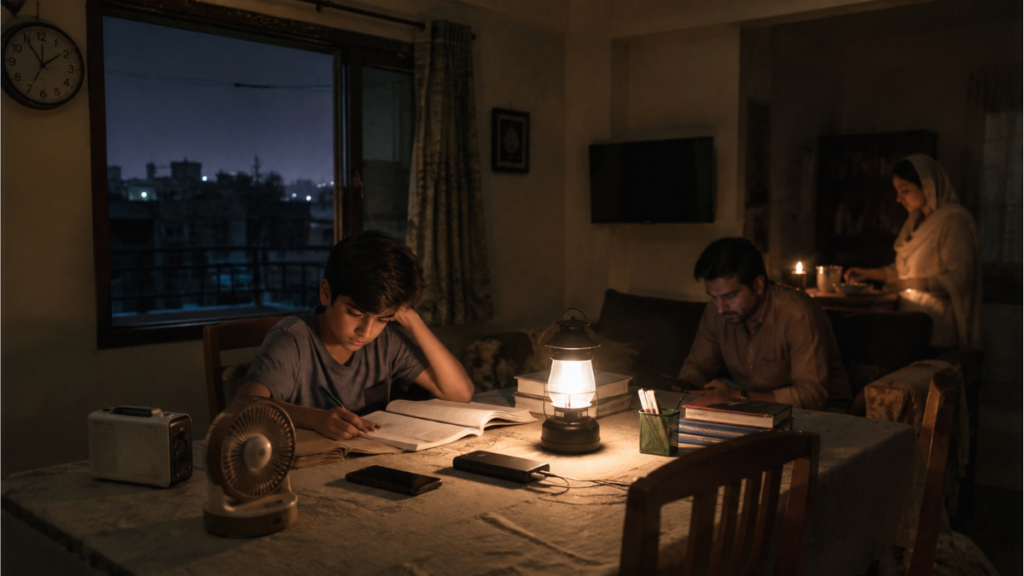
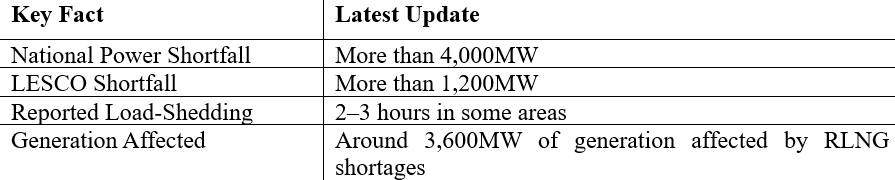
When the electricity goes out, everyday life does not simply pause—it becomes harder to manage. A student may struggle to study, a shopkeeper may lose working hours, while someone working online may suddenly find their routine interrupted. With Pakistan’s electricity shortfall now crossing 4,000MW and load-shedding reported in several areas, the issue is once again affecting ordinary consumers. The question is not only when the electricity will return, but how much these interruptions are costing everyday life.
Why Is Pakistan Facing an Electricity Shortfall?
An electricity shortage can begin with something that sounds technical—a fuel problem, lower generation or a delay in supply—but its effects are felt far beyond the power sector. In the latest situation, RLNG shortages have reduced power generation by around 3,600MW, while generation from Mangla also declined by 195MW, according to the Power Division. The delayed arrival of an RLNG cargo has added further pressure on the system.
Power generation has also declined at several plants, while tripping incidents have contributed to longer outages in parts of the LESCO region. Together, these problems have widened the gap between electricity demand and available supply.
For consumers, however, the technical details eventually come down to one simple problem: electricity may not be available when it is needed.
How Is the Power Shortfall Affecting Households?
The bigger difficulty is the uncertainty. Families may have to change simple routines around an unpredictable power supply, particularly during hot days and peak hours. Household chores, meal preparation, sleep and plans for the next day can all become harder when electricity is unavailable at the wrong time.
Many families also have to make small adjustments to cope with interruptions. Devices may need to be charged in advance, appliances may have to be used at different times, and backup options may become necessary. None of these changes seems major on its own, but when they become part of regular life, they add another layer of pressure to already busy households.
The Hidden Cost of Unreliable Electricity
The cost of an electricity shortage does not always appear on the monthly bill. Frequent outages can push households towards additional spending on UPS systems, batteries and other backup solutions. For small businesses, interruptions can mean wasted stock, delayed services or equipment sitting unused.
Then there is the cost of lost time. A task that normally takes an hour may take longer when electricity or internet services are interrupted. Work may have to be postponed, business hours may be affected and household responsibilities can pile up.
These small disruptions can eventually have a larger effect on productivity and finances, particularly for families and businesses already trying to keep their expenses under control.
Can Pakistan’s Power Supply Become More Reliable?
The immediate situation could improve once the delayed RLNG cargoes arrive and affected power generation returns to normal. The Power Division has said that load management would be reduced as RLNG supplies are restored. It also stated that the temporary load management was being carried out during night-time peak hours, while no load management was being carried out during daytime hours except in areas affected by high distribution losses.
However, reliable electricity requires more than resolving one temporary shortage. Power plants need to remain operational, fuel needs to be available when required, and transmission and distribution networks need to function properly.
For consumers, the expectation is straightforward: electricity should be available when it is needed. The latest shortfall therefore highlights a broader need for a power system that can provide a more stable and dependable supply over time.
For an ordinary Pakistani, 4,000MW is more than a number. It can mean another adjustment at home, lost productive time or another day of managing routines around an uncertain electricity supply. While the current shortage may ease as generation recovers, the larger need remains clear: a power system that people can rely on in their homes, workplaces and communities.