
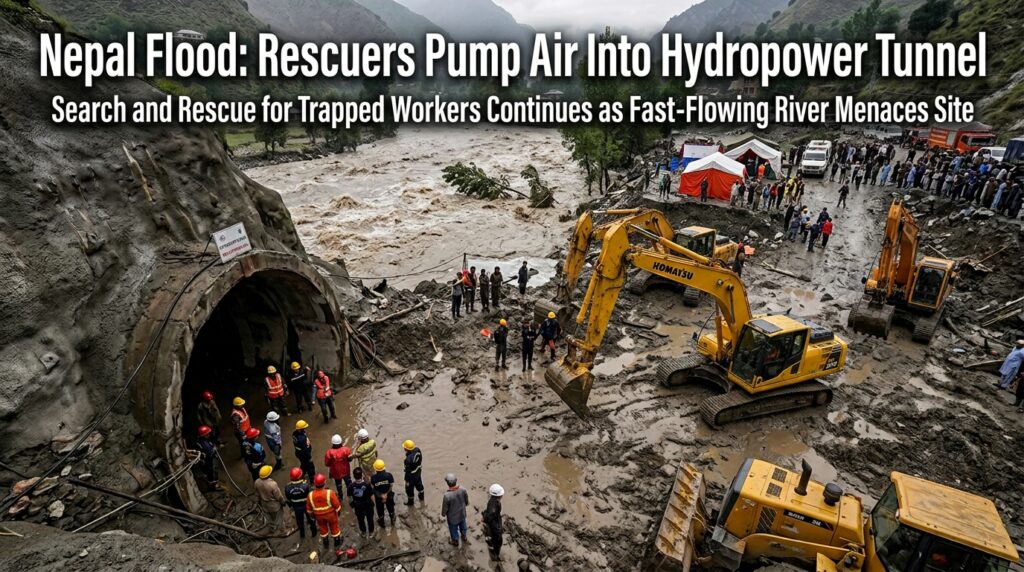
Rescue teams in Nepal are drilling into mud-filled hydropower tunnels and pumping air through boreholes in a desperate bid to reach workers trapped since a glacial collapse triggered catastrophic flash flooding along the Nepal-China border last week. The confirmed death toll on both sides of the border has climbed past 750, with more than 3,000 people still listed as missing, including hundreds of hydropower workers believed to be trapped inside tunnels at the Trishuli 3A and 3B project sites. As rising river levels and the threat of a new glacial lake outburst complicate the operation, Nepal has called in tunnel-rescue specialists from India and China to assist its army and disaster teams.
- A glacier collapse near the Nepal-Tibet border on Wednesday, August 26, 2026, triggered a massive flash flood and mudslide along the Trishuli River.
- Nepal’s National Disaster Risk Reduction and Management Authority (NDRRMA) has recorded at least 734 deaths in Nepal, while Chinese authorities in Tibet have confirmed 16 deaths, bringing the combined toll to over 750.
- More than 3,000 people remain missing across both countries, including around 2,498 in Nepal and 546 in the Tibet Autonomous Region.
- NDRRMA says 933 hydropower workers are among those unaccounted for, with rescue efforts concentrated at the Trishuli 3A and 3B hydropower projects in Rasuwa and Nuwakot districts.
- More than 350 people have already been pulled alive from one flooded tunnel, while over 100 more may still be trapped, according to Nepal’s Prime Minister’s Office.
- The United States has pledged over $3.6 million in humanitarian aid, including emergency food assistance for up to 10,000 flood-affected households.
What Triggered the Nepal-China Flood Disaster
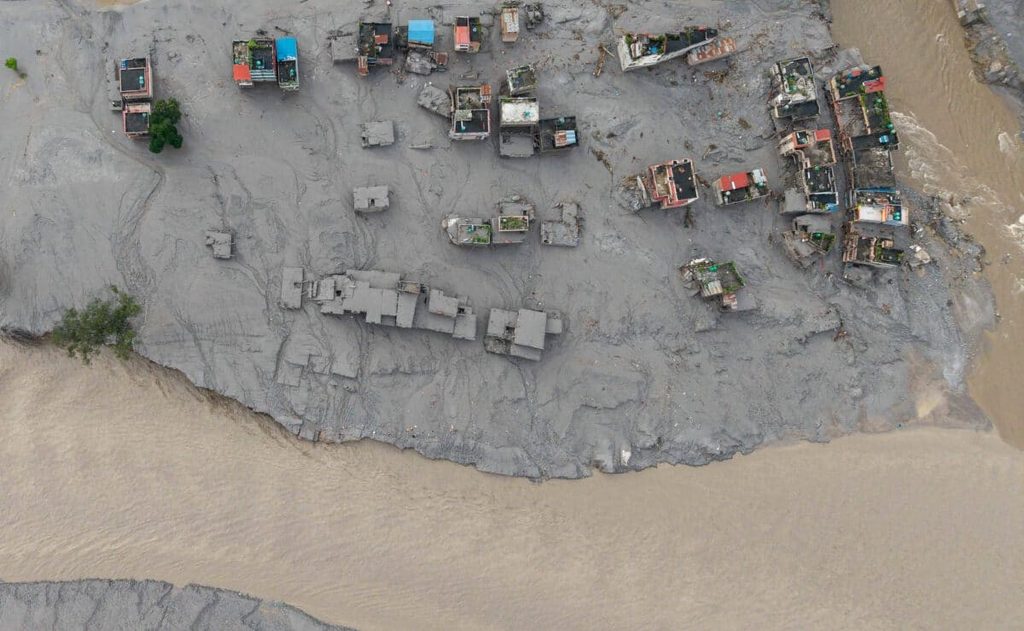
The disaster began on Wednesday, August 26, when a large section of a Himalayan glacier broke away near the Nepal-Tibet border, releasing a torrent of ice, rock and water into the valley below. Geologists said the ice mass that collapsed was dozens of times larger than the Empire State Building, and the resulting shock was strong enough that seismic monitors briefly registered it as a magnitude-4.4 earthquake. The wall of water and debris, described by witnesses as nearly 30 feet high, tore down the Trishuli River, sweeping away homes, bridges, roads and power infrastructure in Nepal’s Rasuwa and Nuwakot districts before crossing into China’s Tibet Autonomous Region. A barrier lake later formed near the border, and Chinese authorities briefly suspended rescue work over fears it could breach and unleash a second flood.
Rescuers Pump Air Into Flooded Hydropower Tunnels
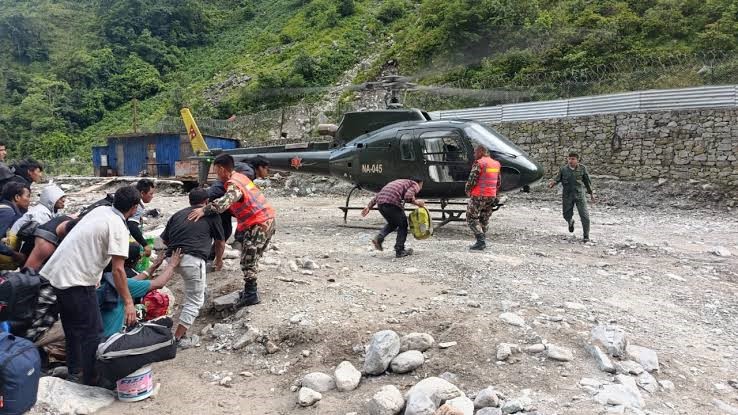
The most urgent phase of the operation is now centred on underground tunnels at the Trishuli 3A and 3B hydropower projects, where hundreds of construction workers were on shift when the flood struck. Nepali army rescue teams have used excavators, hydraulic cutters and drilling machines to bore through mud-packed tunnel sections, and on reaching an upper chamber at Trishuli 3A they began pumping air and lowering a camera to check for survivors. Helicopters have also been used to drop rescuers directly onto tunnel entrances that road access could not reach. Officials say more than 350 workers and residents have already been extracted from one tunnel alive, while Nepal’s Prime Minister’s Office says over 100 people are believed to still be trapped inside. Progress has been repeatedly interrupted: overnight rain and a fresh surge in the Trishuli River flooded parts of the excavation site early Sunday, and officials said water levels rose by five to ten metres in a matter of hours, cutting further into the riverbank near the tunnel entrance.
Death Toll and Missing Persons: The Latest Figures
Nepal’s disaster management authority has confirmed at least 734 deaths within the country, up sharply from the initial toll of under 400 reported in the first days after the flood. China’s Tibet region has separately confirmed 16 deaths. Combined, more than 750 people have died, while over 3,000 remain missing across both countries — roughly 2,498 in Nepal and 546 in Tibet. Officials caution that the missing figures may overlap or shift as records are cross-checked, and that the true toll may not be known for some time given the volume of mud and debris still covering the disaster zone. Among the missing are hundreds of foreign nationals; Chinese authorities said 261 foreign citizens from 23 countries remain unaccounted for in Tibet, and Nepal’s tally includes dozens of American citizens as well as workers from other South Asian countries.
International Assistance and the Rescue Effort
Given the scale and technical difficulty of tunnel rescue work, Nepal’s government has requested specialist support from both India and China, and rescue teams from each country arrived over the weekend to help clear debris and stabilise tunnel entrances. The United States has raised its humanitarian aid pledge to more than $3.6 million, including emergency food assistance for up to 10,000 affected households, according to the State Department. UN climate chief Simon Stiell described the glacial collapse as a stark reminder of how fragile mountain environments have become as glaciers melt and destabilise under changing weather patterns. In Nepal’s Chitwan region, authorities have begun preparing a mass burial site as recovery work shifts alongside the ongoing search for survivors, and thousands of soldiers, police and volunteers remain deployed across the flood zone.
More than a week after the glacial collapse unleashed devastating floods along the Nepal-China border, rescue teams remain locked in a race against time, pumping air into mud-choked tunnels in the hope of finding survivors among hundreds of trapped hydropower workers. With the death toll past 750 and thousands still missing, the disaster stands as one of the deadliest flooding events to hit the Himalayan region in recent memory, and a stark warning about the growing dangers of glacial melt in a warming climate.