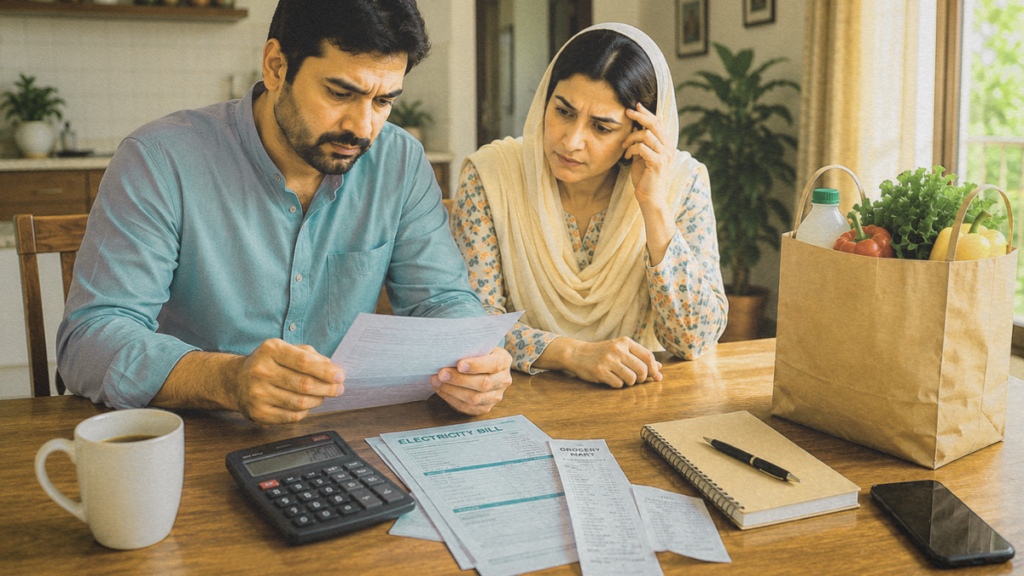
The salary arrives, bills are cleared, and the monthly grocery shopping is finally done. For a few days, everything feels manageable. Then another utility bill, an unexpected expense, or a simple visit to the supermarket reminds many Pakistani families of one harsh reality. Every rupee matters more than ever, and saving money is becoming harder with every passing month.
Key Takeaways
- Essential household expenses remain a major part of monthly budgets.
- Most middle-class incomes are spent on necessities rather than luxuries.
- Unexpected costs often disrupt carefully planned budgets.
- Building a budget and an emergency fund can strengthen long-term financial stability.
When Saving Becomes a Monthly Challenge
By the time most families pay their bills and stock the kitchen, much of the month’s income has already been spoken for. For many middle-class families, saving isn’t difficult because they spend carelessly it’s difficult because the cost of daily life keeps increasing. A routine grocery trip, higher utility bills, and rising education expenses quietly consume a larger share of household income. This isn’t just a feeling. Monthly Consumer Price Index (CPI) reports published by the Pakistan Bureau of Statistics (PBS) continue to reflect changes in the prices of essential goods and services across the country. It isn’t that families suddenly stopped saving. The reality is that essential expenses now leave far less room for savings than they once did.
Where Does the Salary Go?
A monthly salary rarely disappears on unnecessary spending. Most of it is already reserved for rent, groceries, utility bills, transport, education, and healthcare. Before the month is halfway through, the budget is stretched to its limit. Then a medical bill, home repair, or school expense arrives unexpectedly, leaving little or sometimes nothing to save. For many families, saving doesn’t feel like a choice anymore; it feels out of reach.
A Typical Monthly Budget
| Expense | Estimated Amount |
| Monthly Income | Rs120,000 |
| Rent | Rs35,000 |
| Utilities | Rs18,000 |
| Groceries | Rs30,000 |
| Education | Rs15,000 |
| Transport | Rs12,000 |
| Healthcare & Miscellaneous | Rs5,000 |
| Remaining Savings | Rs5,000 |
NOTE: Every family’s situation is different, but this example reflects the financial pressure many households experience.
Can Families Still Save?
Saving in 2026 isn’t about setting aside large amounts of money. It’s about building small habits that make a difference over time. Creating a realistic budget, tracking monthly expenses, avoiding impulse purchases, and keeping even a modest emergency fund can improve financial stability. The amount may be small, but the habit itself is what helps families prepare for unexpected challenges.
For many Pakistani families, saving is no longer about having extra money; it’s about creating a sense of security. Even small, consistent savings can help build greater financial resilience over time. The amount saved may seem small today, but the habit of saving could make the biggest difference tomorrow.